Technologies
Enabling technologies for fusion power plants
A stellarator power plant depends on multiple complex systems functioning as one integrated whole.
Gauss Fusion is developing five critical technology areas that shape how a future plant could be designed, manufactured, assembled, operated and maintained. Each addresses a distinct challenge, while the GIGA™ platform provides the common system-level framework for their development and integration.
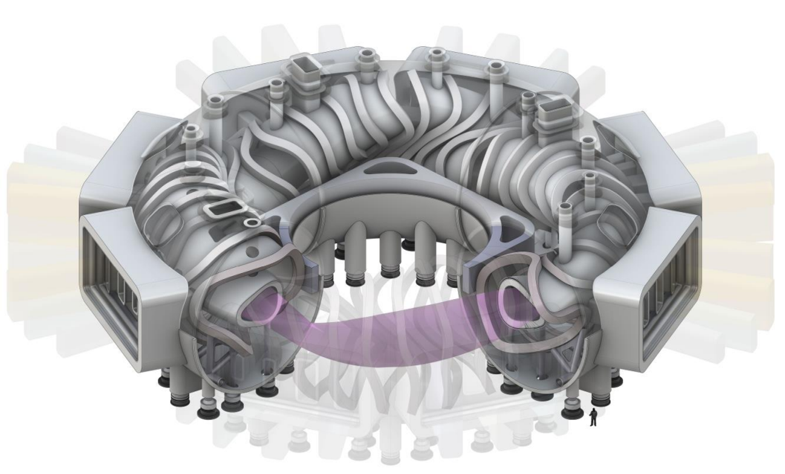
Advanced high-field stellarator design
Building on Wendelstein 7-X experience for a power-plant-focused high-field stellarator.
Led by Dr. Samuel Lazerson, who brings experience directly from Wendelstein 7-X and Princeton Plasma Physics Laboratory.
Key features:
- Provides the magnetic and engineering basis of the power-plant concept.
- Considers magnets, heating, breeding and exhaust systems from the outset.
- Balances plasma requirements with plant size and engineering constraints.
- Supports system-level decisions across the wider GIGA™ platform.
- Addresses the stellarator as a power plant, rather than as an isolated plasma device.
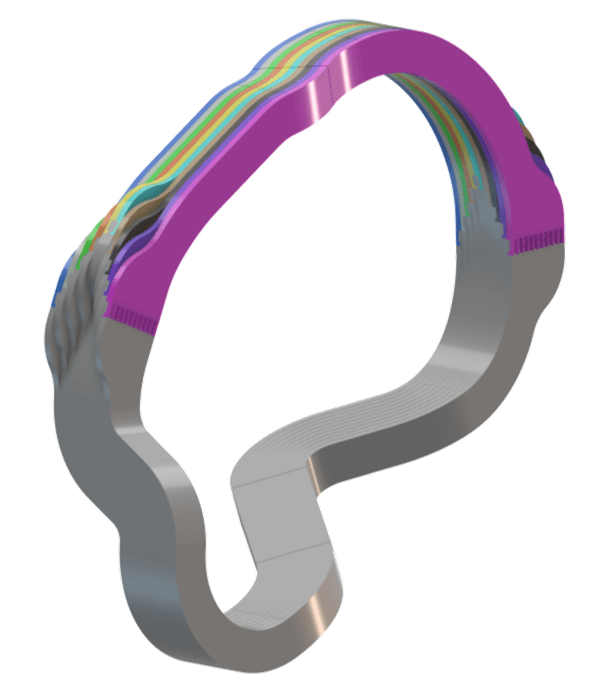
Demountable Mitchell Magnets (DMM™)
Fusion-magnet expertise applied to a demountable, maintainable high-field architecture.
Developed under Dr. Neil Mitchell, drawing on more than 30 years of fusion-magnet experience, including ITER.
Key features:
- Uses modular magnet sections that can be manufactured separately.
- Supports transport and assembly around the vacuum vessel.
- Allows sections of the magnet system to be opened and reconnected.
- Creates potential access routes for inspection and component replacement.
- Addresses manufacture, assembly and maintainability as connected design requirements.
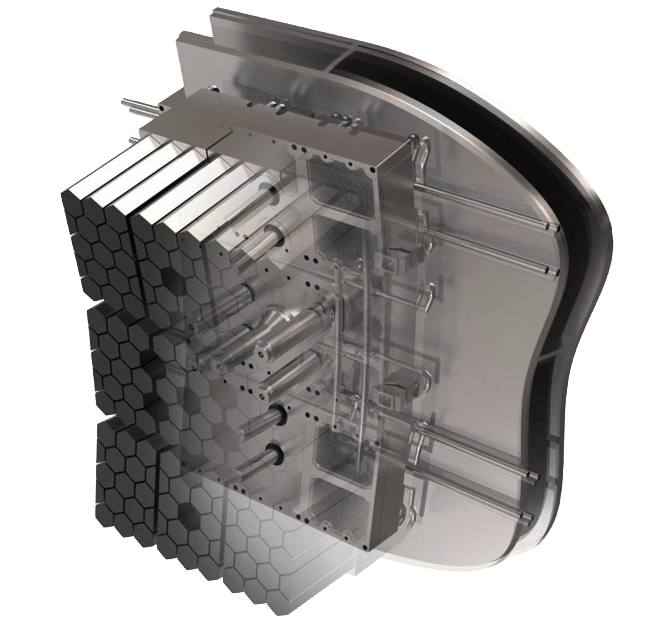
HEXA™ Tritium Breeding
Building on helium-cooled pebble bed (HCPB) breeding-blanket research to create a modular architecture designed for industrial manufacture and maintenance.
Led by Jacobo Zegri, drawing on fusion and nuclear engineering experience including Fusion for Energy.
Key features:
- Designed to capture neutrons produced by fusion reactions and support the production of tritium within the power plant.
- Combines tritium breeding with heat extraction and shielding requirements.
- Uses a modular structure intended to accommodate the geometry of the reactor.
- Developed with manufacture, adaptation and maintenance considered within the wider plant design.
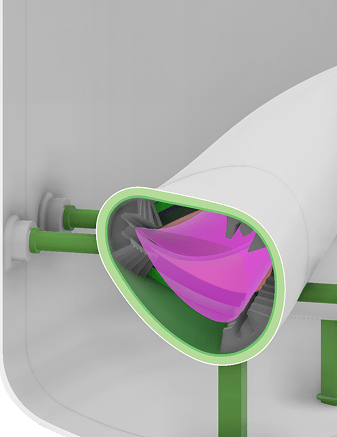
PinkCap™ divertor
Leveraging edge plasma winds for improved pumping in fusion devices.
Led by Matteo Moscheni, an expert in edge plasma simulation and divertor physics
Key features:
- Directs heat and particle exhaust away from the plasma.
- Helps protect surrounding power-plant components.
- Addresses conditions that affect stable operation and component lifetime.
- Considers maintainability alongside plasma-exhaust performance.
- Is developed in the context of the wider stellarator configuration and plant architecture.
Tritium Fuel Cycle
Fuel-cycle development informed by practical experience of tritium operations.
Led by Dr. Paul Staniec, whose experience includes leading JET DTE2/3 tritium operations.
Key features:
- Connects tritium breeding with the systems required to extract, process and return tritium to the plasma.
- Provides the wider fuel-cycle architecture through which tritium must be managed across the plant.
- Is being developed alongside Gauss Fusion’s tritium-breeding and materials technologies within the wider TRIMAT™ platform.
- Is considered as part of the integrated GIGA™ power-plant system rather than as an isolated subsystem.